
Paper in
Upload an exam PDF — even multi-hundred-page documents, streamed safely by client-side decomposition.
AI-native assessment platform
Scan a paper exam. Q-MakerAI returns a structured question bank, copyright-safe practice variants with redrawn figures, and a no-signup online test — reviewed by a person at every gate.
Every item clears two human review gates.
Students take tests with a six-character code, accessible in any browser — no account, no app, no install.
Measured internal benchmark · defined test set
The first three figures are measured on a representative run over a human-verified test set; unit price configurable. The cost comparison is a price-to-price calculation, not a measurement. "Success" denotes technical pipeline reliability, not content accuracy.
The workflow
Q-MakerAI redesigns the entire paper-to-practice workflow around AI — a loop where each step feeds the next, and a person stays in control before anything reaches a learner. The result: effective, personalized practice built from the papers educators already trust.
Upload an exam PDF — even multi-hundred-page documents, streamed safely by client-side decomposition.
A multi-stage pipeline pulls choices, answers, and formulas into a versioned schema across seven item types.
Every item is reviewed beside its original scan — fixes take clicks, not re-authoring. Nothing ships unapproved.
Every verified question spawns curriculum-true variants — and 16 figure engines redraw their graphs and geometry as executable, copyright-safe code.
One click deploys a test as a six-character code or QR — a seamless, sign-up-free experience in any browser.
Computer-algebra grading recognizes mathematically equivalent answers — 1/2 and 0.5 score identically.
What comparable tools don't do
Text-only variant tools reword a question and quietly drop its graph. Q-MakerAI keeps the whole item teachable — from figure, to human sign-off, to the document a classroom actually prints.
16 specialized figure engines — statistics, function graphs, geometry, circuits, chemistry and more — redraw each visual as executable plotting code rendered deterministically, behind a four-axis quality gate. A copyright-safe variant stays a complete, teachable question.
4.8%render fallback — 3 of 63 figures kept the original crop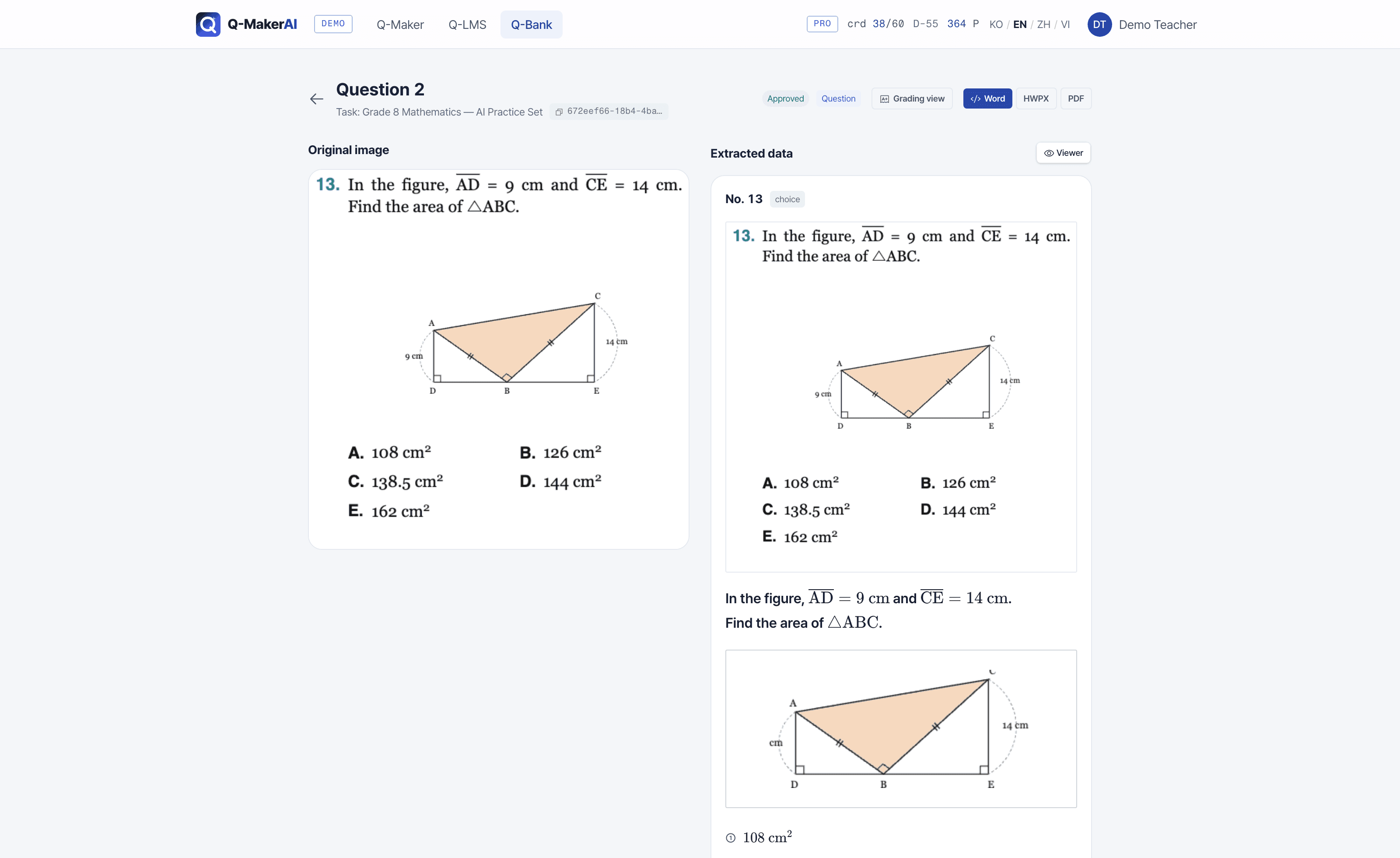
Every review screen places AI output beside the original scan, so the source page is always in view. Region review uses direct bounding-box manipulation; question review uses a block-level editor mirroring how an item is built. Nothing reaches a learner that a person has not approved.
2 mandatory review gates · full source traceability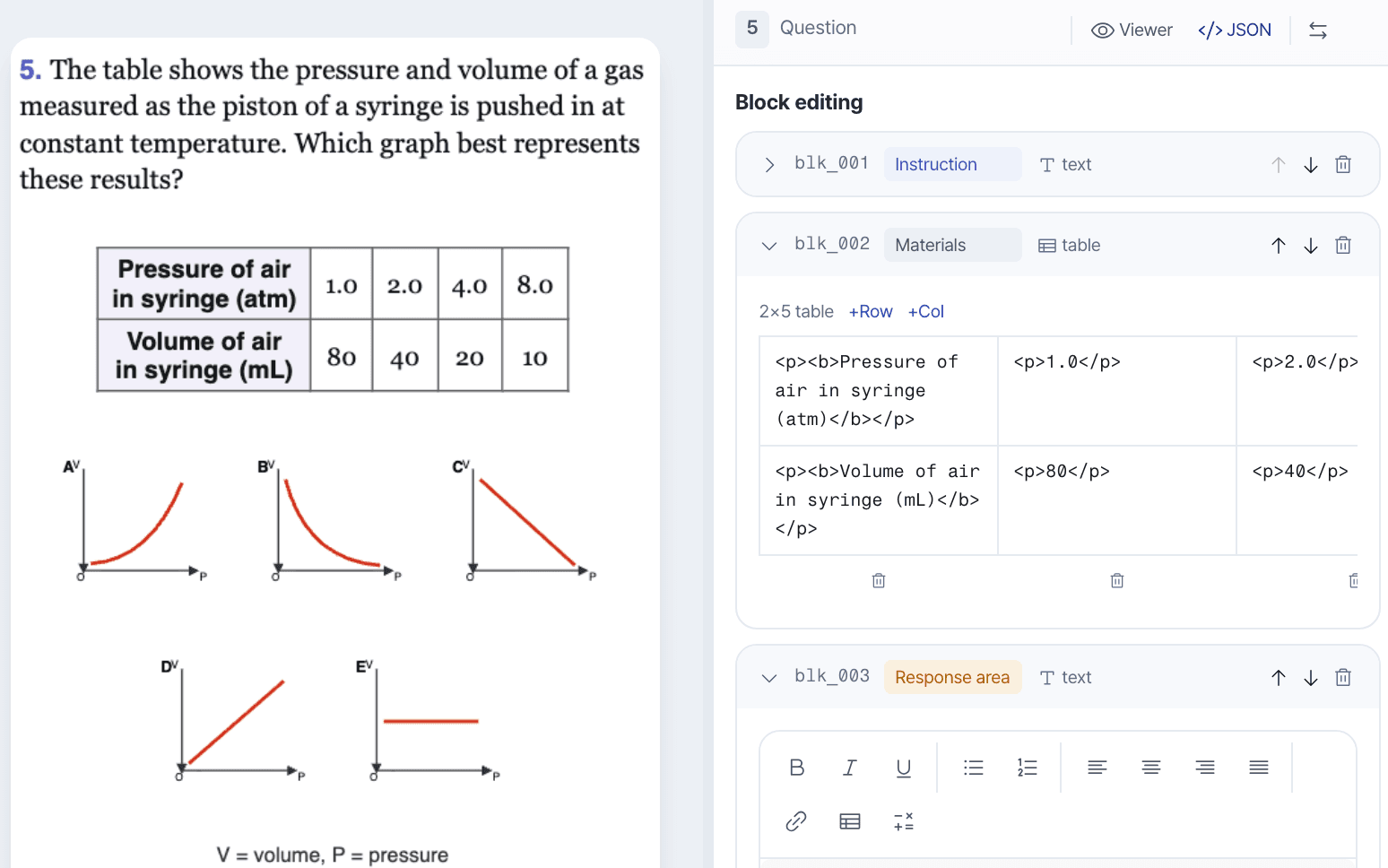
The same schema drives native HWPX and DOCX export with typeset OMML formulas — the formats classrooms actually print — plus Excel results. One granted Korean patent (No. 10-2910853) and three pending applications cover the foundational technology (applicant DevApril Co., Ltd.).
HWPX · DOCX native, with typeset formulas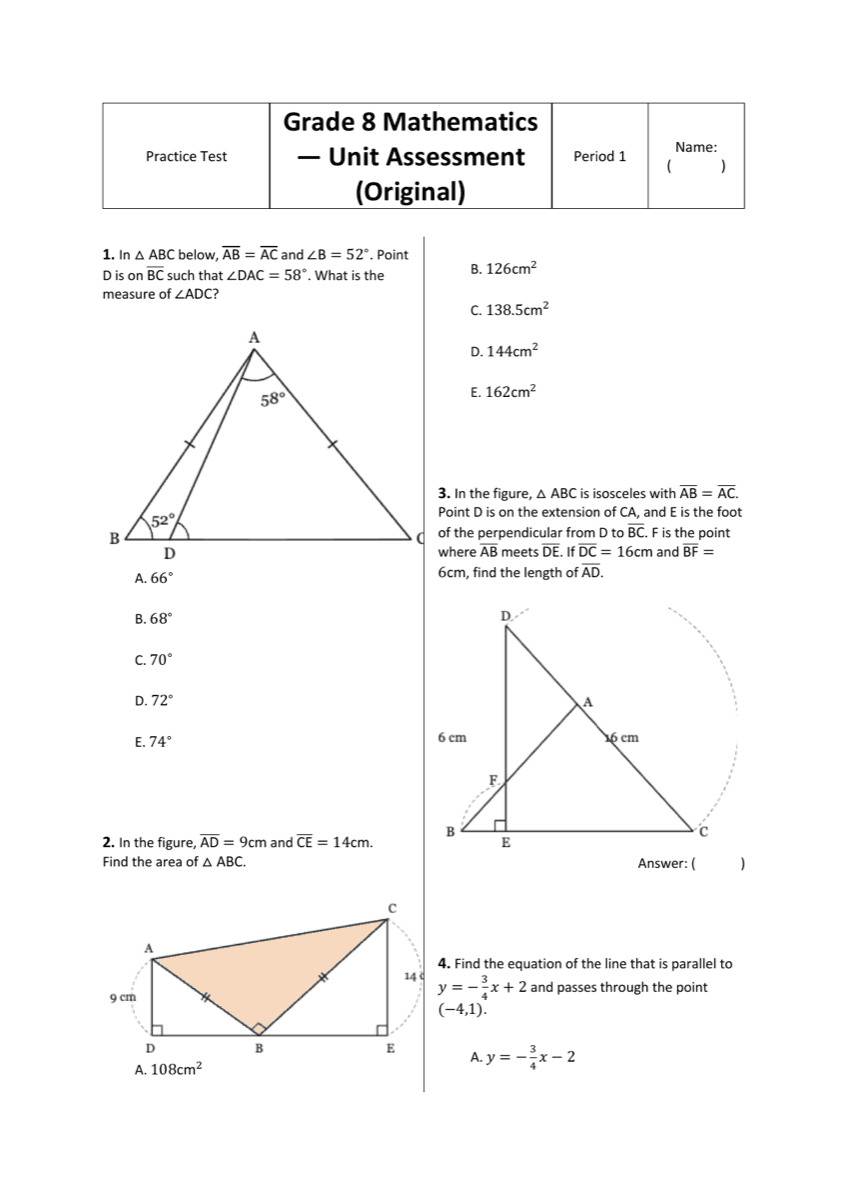
Security & responsible AI
Deterministic rendering, automated screening, human sign-off, and source traceability form a closed verification loop — the same trust language across the app and this page. How it works & what we measure →
Two mandatory review gates. Nothing reaches a learner that a person has not approved.
pHash, SSIM, CLIP and an LLM judge screen every generated item — four independent checks that catch a regenerated figure landing too close to its source, or drifting from what the question asks — classified PASS, REVIEW, or BLOCK.
Each extraction is shown beside its original scanned page, so human judgment stays in the loop.
A seamless six-character code opens the test in any browser — no account, no app, no install. No passwords, emails, or phone numbers are collected from students — only a display name and a session re-entry code.
Who it's for
The same pipeline serves the one-person tutor and the publisher building digital add-ons — interactive, accessible, effective practice wherever educators hold paper worth teaching from.
Turn the past papers you already trust into your own personalized practice bank — copyright-safe, ready to deliver.
Give 1–20 instructors publisher-grade authoring without a content team — proven questions, redrawn figures, live results.
Build digital add-ons on existing textbooks with the same pipeline — schools and homeschool co-ops scale from here.